Artist:Han Dong;Curator:He Yongmiao;Academic Director:Yang Jian;Venue:Renke Art, No. 172 Qingchun Road, Gongshu District, Hangzhou
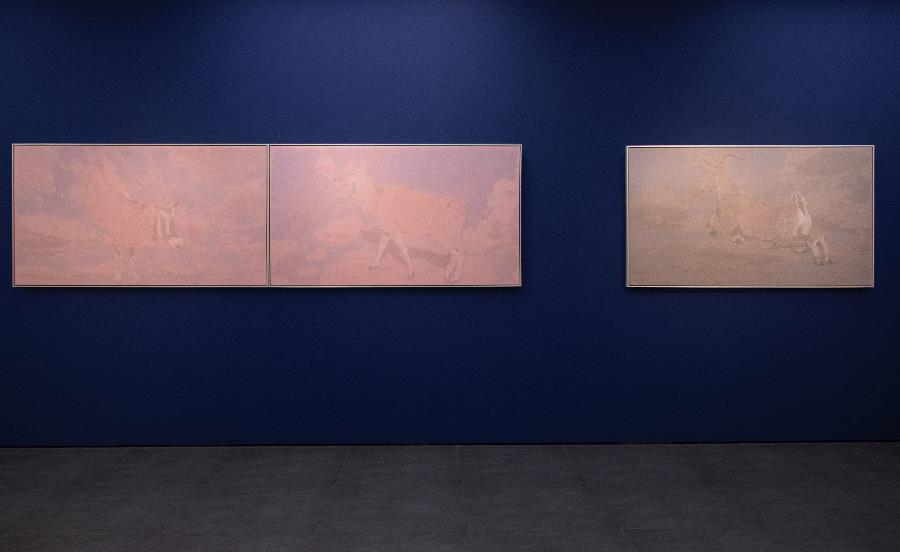
Han Dong not only infuses ink language with a religious spiritual dimension but also provides a powerful response from Eastern spirituality to contemporary art's ultimate questions. As this exhibition reveals, his painting is both an expedient means and a practice across countless lifetimes, pointing toward that unmoving mind in the shaping of every feather, every hollyhock. "Han Dong abides in thusness, abides in the antelope, abides in the rabbit, abides in the golden pheasant and the moth... He does not paint a painting, but his letter–the flowers in the mouths of the three antelopes on the clouds are his letter to the world," says academic preside Yang Jian.

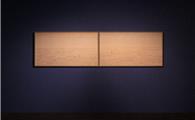


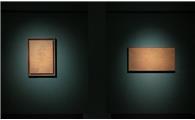
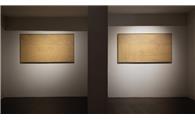
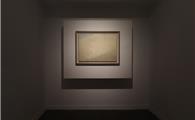

Dream and Liberation
Text by Yang Jian
The further life goes, the more it resembles a dream. Why is that? Because we are mortal; death declares that life is a dream. Human life is like a prisoner heading to the execution ground, step by step approaching death. If we truly knew that life is a dream, we would be awakened people. But unfortunately, we only know it verbally, and so we remain stuck here, life after life, becoming strangers to ourselves, never awake for a moment. We love ourselves most, yet we are most unfamiliar with ourselves. Han Dong is an artist in this serious sense – he is an artist who contemplates life and death, not an ordinary painter.
In Han Dong's paintings, everything is steeped in a grey dream. There is a kind of sorrow, a kind of worry, within that startling existence. Yet all of this is enveloped in a grey, indifferent tone – grey and indifferent, grey and desolate, grey and unconcerned. His palette is always grey. Grey is a color of sympathy, compassion, and mercy.
In his paintings, there is often a magnification of the small. He can enlarge a moth or a bee many times over, making them larger than the pagoda beside them, larger than the Jiangnan water town beneath them. Why create such a surreal effect? Han Dong's purpose is to magnify the situation of life, to show it to us enlarged, because our seeing, our observing, is flawed. The moths, bees, and antelopes in his paintings may not be moths, bees, and antelopes – perhaps they are ourselves. Because we have lost true seeing, moths, bees, and antelopes remain merely moths, bees, and antelopes. These paintings are painted for no other reason than that we must see and see ourselves clearly.
In his paintings, Han Dong often does the opposite: the subject is no longer recessive, no longer like the classical landscape where the human figure is very small, hidden in nature. Instead, it is very prominent, even abrupt, with a great conflict stirring in the picture. This is because our inversions force such an arrangement – the picture even has a powerful force to expel us from the dream. At the same time, to accompany this forceful expulsion, Han Dong's technique has shifted from meticulous gongbi to a composed and vigorous xieyi (freehand). Life cannot be depicted meticulously; life can only be expressed in xieyi. Thus, the vow to expel us from the dream and make us awake becomes all the more powerful.
He paints dream after dream, each looking so real. He paints an enlarged world of tiny creatures, an enlarged world of sparks and flashes. Each of his paintings is an aphorism, different in form but the same in meaning: pointing to the urgency of life and death, pointing to non-attached wisdom. A timely modern fable, a fable about ourselves. Where are you going? Continue dreaming or wake up immediately? Han Dong paints many such dreams because so few wake up. He must continue painting – from entering the dream to awakening, from ignorance to enlightenment. Painting is like a Buddhist practice.
What he repeatedly paints is a faded world. The brilliant colors have been battered by wind and rain, leaving only remnants. He would actually like to fade the colors away; he does not need color. But color needs him, so he keeps it, lets it stay. Yet what he wants to speak of is not color, but something more important than color – that existence which must be directly pointed to, that existence without increase or decrease, colorless, tasteless, odorless. He expresses and touches that core again and again, using such plain, calm, and mindless colors – so ethereal, yet full of vow power. In his paintings, what does not change is most important; what changes is not.
He always paints dreams. Many sleep in this dream; few wake from it. For this reason, the golden pheasant in Han Dong's painting plunges straight down from the sky – such an intense descent, such a conflicted expression – presenting only a void. Only through void can you wake from such a long dream. From this perspective, the birds suddenly descending in Han Dong's paintings are like a Zen master's staff, striking down suddenly to shatter our attachments. Together with the distant, tiny pagoda – existing as the awakened – they appear before your eyes. Thus, Han Dong's paintings always wander between regret and compassion, between the original and the present. The pagoda always wants to return to the original but is pulled back by the present, becoming a Zen master's staff, an alien bird diving down. All of this is enveloped in Han Dong's characteristic peaceful grey, as if nothing has happened. Note: in Han Dong's paintings, grey is a balance, a supreme compassion, because only grey makes it possible to enter the void.
Apart from the enveloping grey, there is the repeated, almost vertical plunge of an alien bird. Its purpose is to destroy the ego, to drink up the ego, to reach no-self. If you wake up at that moment, the great thousand worlds bloom instantly under the diving bird's plunge. Vertical descent is a very intense self-offering. Its destination is simply a wondrous emptiness. Originally there was no self; the destination has no self either. This is completely consistent with the classical spirit of seriousness. The purpose of vertical descent, of plunging straight down, is to destroy the ego, to reach no-self. Yes, destroy the self, eat the self, destroy the dream, eat the dream. In Han Dong's paintings, this is just everyday.
Han Dong paints a moment of decision: dream or awakening. This is a moment of decision – vertical descent, plunging straight down – to place one in the realm of emptiness, to let them exist as they are. Because attachment is too fierce, it must be smashed by the vertical plunge.
Han Dong abides in thusness, abides in the antelope, abides in the rabbit, abides in the golden pheasant and the moth. The antelope, rabbit, golden pheasant, and moth are all metaphors and symbols. Because time now moves faster than time itself, he abides in that time, slower than that time. Because he has faith, because he has a most beautiful flower to offer to others. He paints inverted dreams and the liberation from inverted dreams. Through his painting, he expresses that the human world is actually an animal world. He does not paint a painting; he paints his letter. The flowers in the mouths of the three antelopes on the clouds are his letter to the world.
The three antelopes awakened from the great dream have extraordinary muscles and extraordinary strength. Such an expression of strength has never appeared in contemporary art. This is Eastern strength – the strength of new life and awakening – completely different from Western muscular strength. Art is a matter of transformation. These three antelopes are masterpieces of transformation, and the rabbit as strong as an ox also possesses powerful strength of liberation and transformation.
Perhaps one day, the soul dreams a dream, and someone remembers the dream but forgets the soul. This is Han Dong's art – an artist who longs for human awakening, who has long labored in the fields of dream and life-and-death, who has long painted dreams, painted life and death, painted liberation from life and death. He paints the painting of life and death. What to do about life and death? With the grey in each of his paintings, he asks you: what to do about life and death?
Outside this painting, or rather, outside this calm but intensely conflicted painting, there is an onlooker, a being like air, quietly and compassionately watching everything that happens. Perhaps these paintings do not exist – no painting, no painter, no dream, no awakening from the dream.
March 19, 2026
Artist Biography
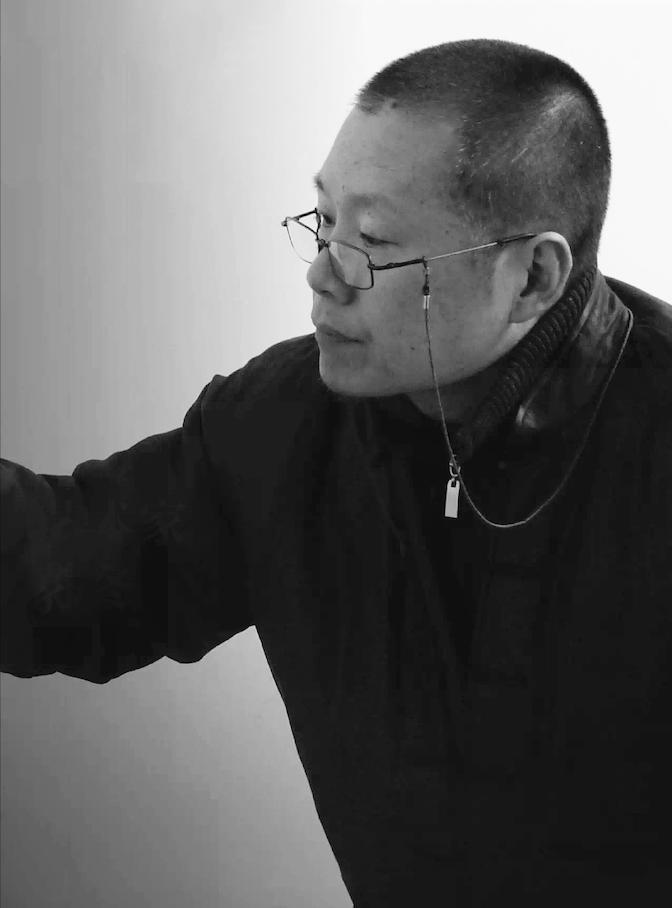
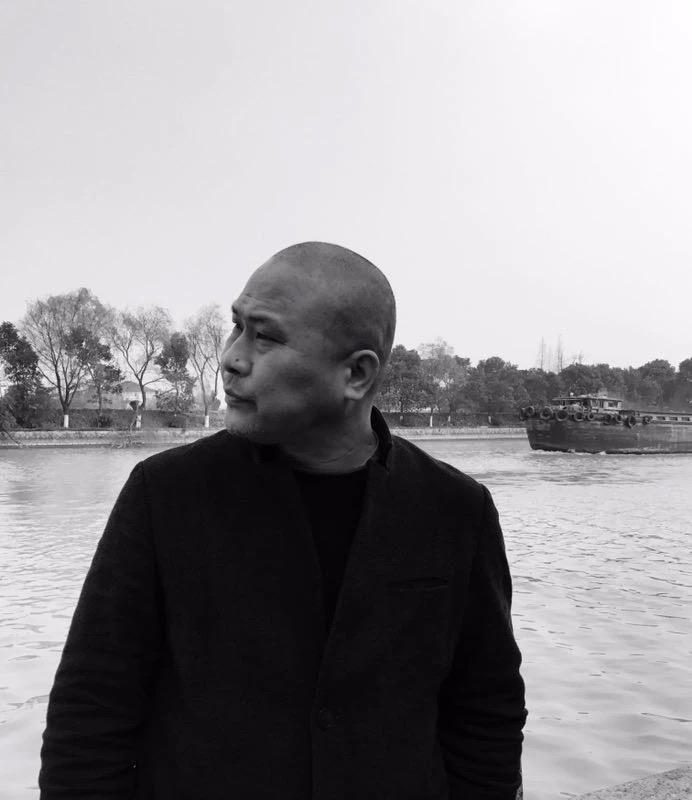
Born in 1958 in Dafeng, Jiangsu. Graduated from the Department of Arts and Crafts at Nanjing University of the Arts in 1986. Currently lives and works in Yangzhou.Han Dong's practice is consistently marked by a literati humility, rigor, tranquility, and a reverent gaze toward the dignity of life, earning him the title "contemporary spiritual hermit." His artistic practice has established an academic presence in the contemporary art field since the 1980s: in 1986, his lacquer painting Green Fruit was selected for the First China Lacquer Painting Exhibition and won an Excellence Award; in 1990, his work Listening to the Qin was selected for the "Hong Kong Chinese Art Exhibition"; in 1992, his oil painting Indoor Figure was selected for the "Guangzhou First 1990s Art Biennale" and won third prize; in 1995, his oil painting Sandalwood Interior was selected for the "Third China Oil Painting Annual Exhibition" at the National Art Museum of China. He has presented several solo exhibitions at Renke Art, including "All Good Returns to One," "Myth Studies," and "To the Last Artisan of Mogao Caves." He has also participated in important academic exhibitions such as "Contemporary Context: Chinese Version Modern Art Exhibition" (curated by Chen Xiaoxin, 2007) and "Yipai: Century Thinking" Contemporary Art Exhibition (curated by Gao Minglu, 2009). His practice has been featured in academic journals such as Jiangsu Pictorial, Fine Arts Documentation, Art World, and National Art.