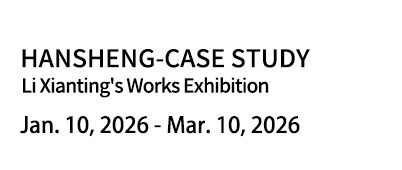
Artist: Li Xianting;Curator:He Yongmiao;Academic Director:Yang Jian;Venue:Renke Art, No. 172 Qingchun Road, Gongshu District, Hangzhou
This exhibition focuses on the life and character manifested in Li Xianting's calligraphy. His creative practice is a direct externalization of his personality and spirit. In the flow and restraint of his brushstrokes, we witness a soul that remains independent and ever-present, imprinting its own mark of the times onto paper.


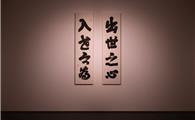

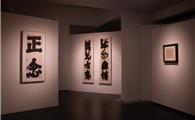

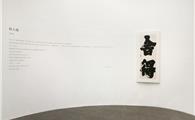


The Return of Zhongzheng
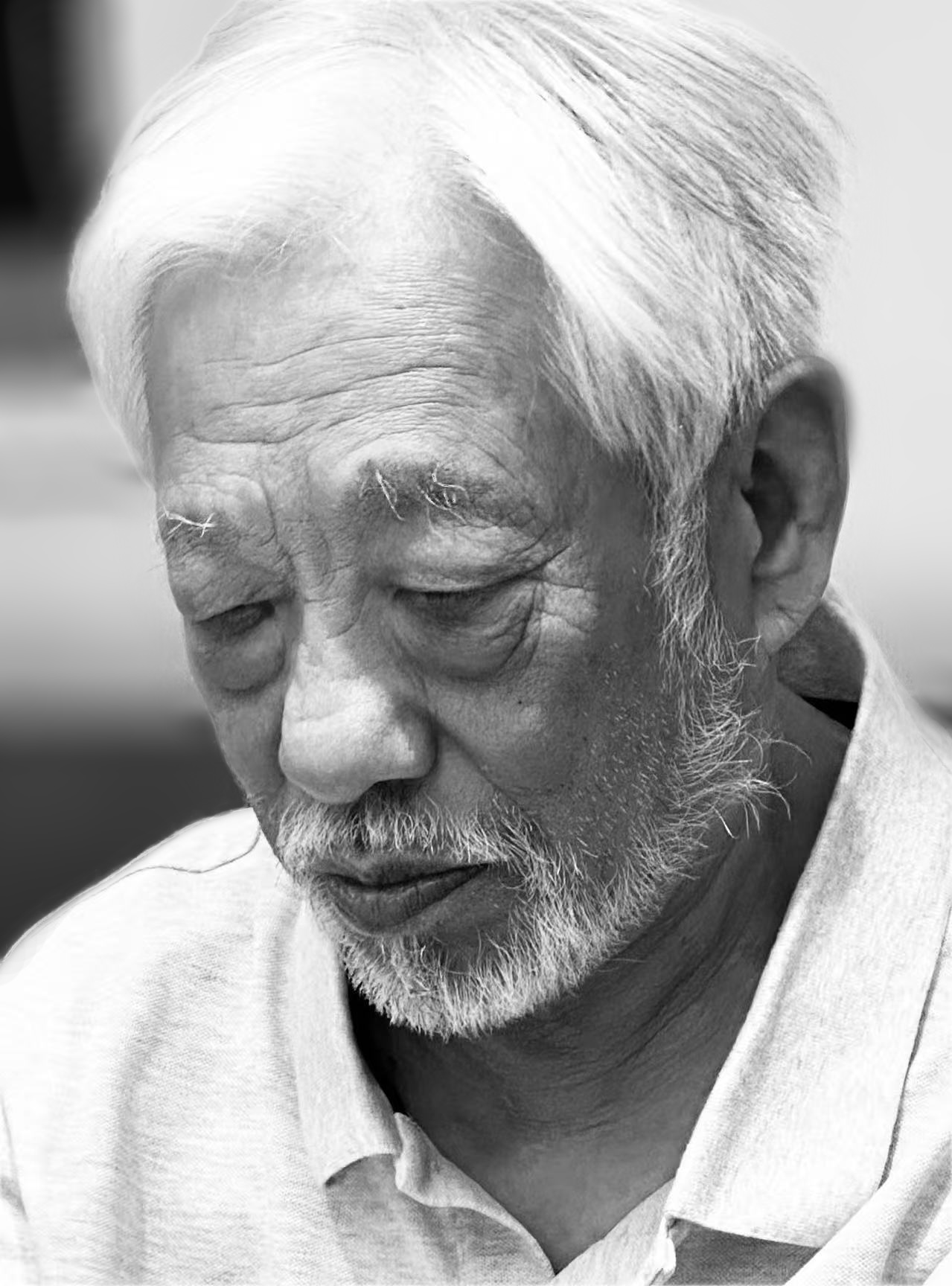
Outside Mr. Li's window, black and gray magpies fly past. One flock departs, another arrives. Sunlight gently illuminates the branches, much like Mr. Li himself sits gently, peacefully, and kindly before us — a standard-bearer of a man, not tall in stature. He practices Tai Chi every morning, rides his bicycle to buy groceries and cook. He says he is not creating calligraphy; he says writing characters is merely one of his many household chores, and the last one at that. He says he is an amateur in everything, except for editing, his early profession, which was his specialty.
Mr. Li writes as if plowing a field. Every stroke, every line is profoundly deep — perhaps the deepest I have seen in calligraphy. They sink deeply into the rice paper and deeply into our hearts. Never have I seen a calligrapher's strokes penetrate paper and human hearts so profoundly, so zhongzheng, so weightily. They possess both intense restraint and powerful sweep. On the paper where he writes, every stroke, every line, every character formed by these strokes rests within the paper, like wood submerged in water, and also sinks into the viewer's heart after being seen.
Mr. Li says he started writing very young. Perhaps on some day, at some moment in 2025, Mr. Li's calligraphy, like a Zen monk's enlightenment, suddenly connected, suddenly came to fruition. The crucial xu in his writing appeared, the life-and-death ge emerged. The Mr. Li before and the Mr. Li now; xu and shi came together, becoming one family. A majestic momentum, the appearance of zhongzheng suddenly manifested. In every stroke, every sweep or press, there seems to be a person present, a pair of iron shoulders, an ineffable ge of zhongzheng. From then on, it became utterly different from contemporary calligraphy built on technique. The greatest lack in technique-based contemporary calligraphy is that life, character, and transcendence have not entered their writing. The absence of life and character is the plight of a generation of calligraphers, making them hollow people and their writing hollow characters. What meaning does calligraphy without the support of life and character have? It only brings shame to our literary ancestors.
Mr. Li's characters are not a calligrapher's characters; they are the characters of a human being being human, characters that must be so. Because history is most severe in its elimination of ge, what remains may not be his calligraphy, but this person himself — a literary arhat, a person whose force penetrates three-tenths of an inch into wood, a person whose waterline is deepest. His focus is most dedicated, hence the thickness, density, and purity of his lines are vastly different, enabling the vigorous strength of his brush and the grandeur of his momentum. A lifetime's experience can be condensed into two characters, four characters, a couplet. A man of small stature can write characters that hold up the sky and anchor the earth. Looking at his characters, one thinks and thinks, and only Yan Lu Gong (Yan Zhenqing) stands in profound resonance with him. Among so many calligraphers here, few can echo the classic masters in our calligraphy history. Only he, in the obscure workings of fate, overlaps with Yan Lu Gong. We have wandered too long on the bias and deviance of modern and contemporary Japanese calligraphy, with almost no one shining in reflection with figures from our own calligraphy history. Only Mr. Li alone returns to our classic path of zhongzheng. He knows zhongzheng can save us from our bias.
Mr. Li says he is an amateur in everything, yet clearly he has a dual mission — criticism and calligraphy. Criticism is complete; calligraphy is being completed, or perhaps is already complete. That is the return of zhongzheng. He brings back the lost zhongzheng. The loss of zhongzheng is actually the loss of the human; we have lost the human, misplaced the person. His calligraphy, in fact, comes to correct deviation, an internal renovation, not an external decoration.
For a century, calligraphy has been dead. It requires great strength to revive it. Nothing else but the human, the return of the human. Without the human, whence come characters? What force is it in Mr. Li's characters that moves, and moves continually, our innermost being? It is none other than the force of the human, the force of ge, the force of zhongzheng. Only ge, the lost ge, the rebuilt ge, can remake our calligraphy. Today, there are many with peerless skill in calligraphy, but calligraphy where a person, a ge, a life has entered is almost zero.
The emergence of Mr. Li's calligraphy dispels the curse that Inoue Yūichi has cast upon Chinese calligraphy for so many years. How did Mr. Li dispel this curse? Quite simply, it was zhongzheng zhuangyan. It was the stability forged by his thousand-hammered, hundred-refined morning Tai Chi that dispelled this curse. Mr. Li has come to correct deviation. This correction appears within calligraphy. His appearance signifies the return of zhongzheng! He has revived the dormant core of our calligraphy aesthetics. Zhongzheng can clarify confusion, can anchor endlessly churning waves.
Zhongzheng has been lost for too long; we thought it would not return. It is returning, through turbulent fate, through this person — this most complex person yet with the most zhongzheng characters, the kindest smile. Is this a miracle or a gift? The kindness of an old man with white beard and white hair also brings magpies. They come every day, flying outside this suffering person's house, soaring up and down. One flock flies away, another arrives, circling this zhongzheng room, circling this zhongzheng person. Magpies always fly towards places with soul, towards the one with vow-power and thus the capacity to nurture.
He is so ordinary. His strength may be the strength of ordinariness. He is old yet ageless, white-haired, his whiteness containing a kindly smile. His strength may be the strength of kindness. An era's kiln mouth may exist only for a few individuals. He possesses nothing but a carrying-pole-like ge. At the final moment comes the original person. The silence he writes is silence itself. The insight he writes is insight itself. The solitude he writes is solitude itself. Always poor, because he has a mission.
In the small cottage of our civilization, there must be several pillars holding up the roof. When heaven invests great responsibility, our dear elder here must be one of them. He sits before us, small in stature, gentle, kindly, speaking softly and quietly, telling but one story. Not told every day; perhaps he has told many stories, but still tells that one story. A person's story. A story of zhongzheng. A story you once heard but have forgotten.
December 17, 2025
Artist Biography